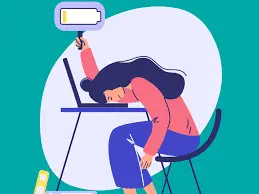
How to regain emotional balance when facing what we cannot control
There are days when life feels like an ocean we never chose to navigate: an unexpected diagnosis, a job loss, a relationship ending, an economic crisis, or simply the uncertainty of the future. Faced with these situations, many people feel they are losing control over their emotions. This is where Hope Therapy offers something different from simply “thinking positive:” it teaches us to find pathways and motivation even when external circumstances are beyond our control.
What Is Hope Therapy?
Developed from the research of psychologist C. R. Snyder, Hope Therapy is built on a central idea: hope is not a passive feeling, but a skill that can be trained. It rests on three components that work together:
- Goals: having a clear direction, however small, to move toward.
- Pathways thinking: the ability to imagine different routes to reach that goal, even when the original path is blocked.
- Agency thinking: the internal energy and motivation to sustain the effort — the belief that “I can do this.”
The combination of these three elements is what allows a person to keep moving forward, even when the environment feels uncertain or adverse.
When What Affects Us Is Beyond Our Control
Much of our emotional distress does not come from the events themselves, but from the feeling of having no power over them. A layoff, a family member’s illness, political or economic changes, the weather, other people’s decisions — we cannot control these events. Still, we can choose how we respond and where we direct our energy. Hope Therapy does not promise to eliminate uncertainty; instead, it shifts the focus from “what I cannot change” to “what I can still build,” even if it’s just one small step.
Three Practical Steps to Apply Today
- Identify which part of the situation truly depends on you (even a small part) and separate it from what does not.
- Define one small, achievable goal related to that part you can influence.
- Think of at least two different paths toward that goal, in case one gets blocked.
Questions for Self-Reflection
Take a few minutes, in silence or in writing, to answer these questions the next time a situation beyond your control leaves you feeling emotionally unsettled:
- What part of this situation truly depends on me, and what part is entirely outside my control?
- If I can’t change the outcome, what can I still change about how I’m experiencing it?
- What would be one small, realistic first step I could take today, even if it doesn’t solve everything?
- If the path I have in mind gets blocked, what alternative route could I try?
- What has helped me get through difficult situations before, and how can I apply that now?
- Who could I ask for support or company while I move through this uncertainty?
- What would I tell a friend who was going through exactly what I’m going through?
Closing with Hope
Hope, understood this way, is not about denying difficulty or forcing optimism. It is an active way of thinking that helps us hold steady amid uncertainty, reminding us that there is always some degree of choice — however small — in how we move forward.
Reference
Anthropic. (2026). Claude (Sonnet 5 version) [Large language model]. https://claude.ai